A wet floor can involve the finish, adhesive, underlayment, and subfloor. Swelling or cupping may continue after the top feels dry. Decisions about saving a floor depend on contamination and material condition.
WHAT HAPPENS NEXT
What an assessment should consider
- 01
Identify the flooring and layers beneath it.
- 02
Check moisture at transitions and under accessible edges.
- 03
Discuss whether drying access or removal is necessary.
- 04
Review moisture before installing replacement floor finishes.
Discuss the scope before work begins
Share the discovery time, whether the source is controlled, and the rooms or materials involved. Mention any previous repairs and any known contamination. Work depends on actual conditions and access.
Ask which materials may need removal, how the area will be protected, and what information will be recorded. Repair of the original plumbing, roofing, HVAC, or drainage fault may require another professional.
A floor is an assembly, not a single surface
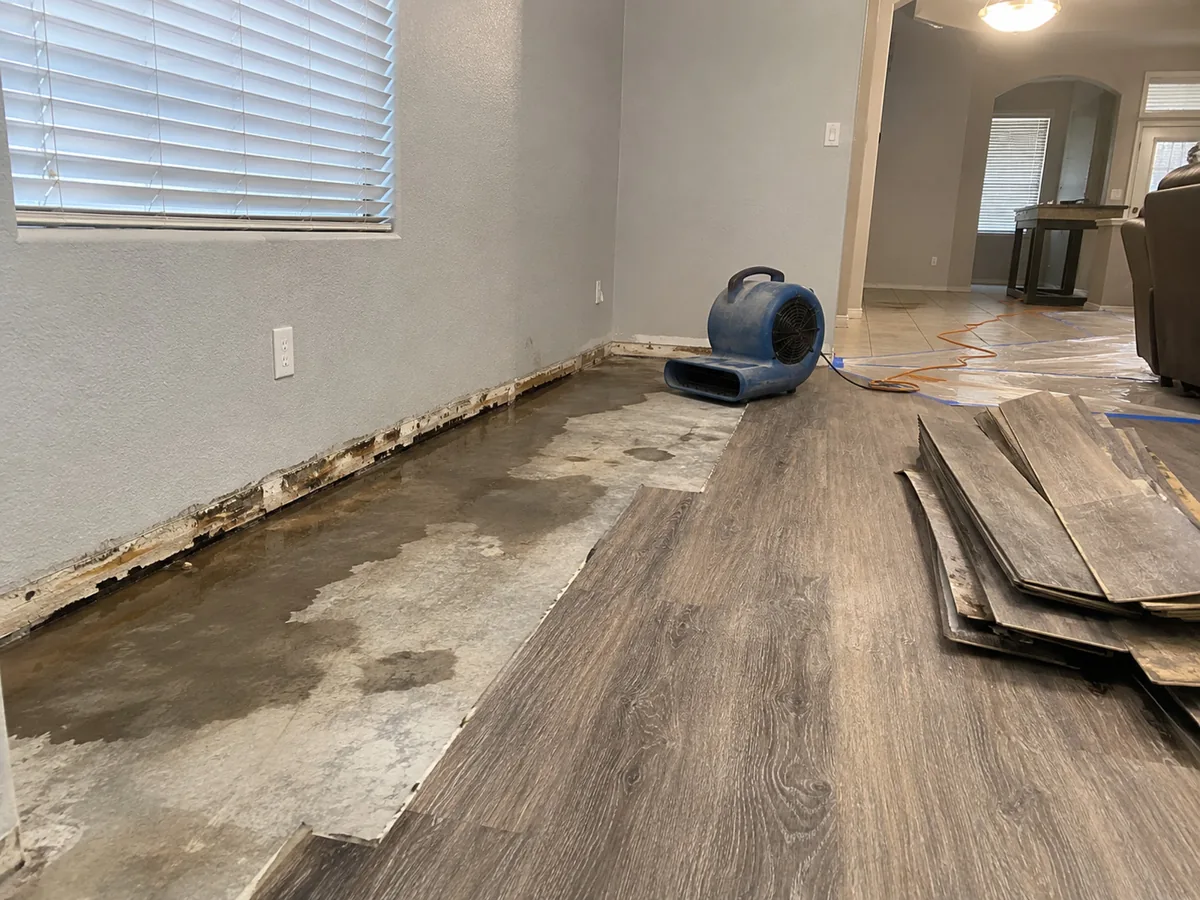
The visible finish may sit over adhesive, underlayment, a moisture-control layer, and a wood or concrete base. Water can reach one layer and remain hidden beneath another. Floor drying starts by identifying that construction as far as it is accessible, along with the source and duration of the wetting.
A surface that wipes clean may still have water underneath. At a doorway, the adjoining floor may use a different material and hold moisture differently. Ask whether the assessment includes transitions, edges, and built-in areas rather than only the open center of the room. The useful boundary follows the water path.
Wood movement is evidence to document
Raised board edges, changed gaps, or lifted seams are worth recording before repair. They describe a change in the floor, but they do not by themselves determine whether it can be saved. Material, contamination, attachment method, and access to wet layers all affect the decision.
Avoid rushing into sanding or installing a replacement finish while the assembly is still being assessed. Altering the surface too early can complicate the eventual repair. Ask the flooring contractor about the condition required before finishing or installation, and how that condition will be tested for the particular system.
Drying in place needs a route for moisture to leave
Retaining the installed floor is useful only if the affected layers can be addressed. A covering that limits evaporation or an inaccessible wet underlayment may change the plan. Ask what the proposed method can reach and how progress in the hidden layer will be checked.
Selective removal may be needed where materials are damaged or where access cannot otherwise be established. That decision should be explained in relation to the assembly. A blanket promise to save every board is no more useful than assuming the entire floor must be removed without examining the extent and condition.
Replacement flooring has its own acceptance requirements
A restoration moisture survey and a manufacturer’s flooring acceptance test are not interchangeable. A concrete substrate may require a specified test before an adhesive system is installed. A wood assembly may need comparison with appropriate conditions for the new product and building. Ask the installer what they require.
Keep the drying record, product information, and installation test results together. They help distinguish a completed drying phase from a floor that is ready for the chosen replacement. If baseboards or cabinets were removed for access, include their reinstatement in the repair discussion so wet concealed edges are not closed prematurely.
What the inspection needs to resolve
| Observed condition | Why it matters | Useful next step |
|---|---|---|
| Raised wood edges | Material movement needs assessment | Record the condition before sanding |
| Dry finish above wet backing | The assembly has more than one layer | Assess access and the retained substrate |
| Replacement floor is planned | Product requirements may differ from survey tests | Ask the installer about acceptance testing |
How water moves through a room
How to tell whether drying is progressing
The useful comparison is between repeat readings at identified locations. Ask which wall, floor layer, or framing member is being checked and whether the instrument setting suits that material. An unexplained number from a handheld meter is less useful than a record that shows the location, method, and change over time.
Room temperature and humidity describe the surrounding air. They do not prove that the center of a thick material or the underside of a floor has dried. A dry surface and a damp concealed layer can exist at the same time. Where readings stop improving, access, equipment placement, or the assumption that the source has stopped may need another look.
Before finishes are reinstalled, review the affected assembly and any product-specific installation requirements with the repair contractor. The target for a replacement flooring system may involve a different test from a quick moisture survey. Avoid treating one meter setting or a fixed number of equipment days as a universal completion test.
What to ask for in the work scope
Ask for a description of the affected rooms and the materials included in the work. A room name alone is not enough when water has reached a cabinet cavity, an adjoining closet, or the ceiling below. Mark the boundaries together and ask what would cause the scope to change after work starts.
The estimate should distinguish water removal, cleaning, equipment, material removal, and reconstruction where those items apply. Ask whether monitoring visits are included and how additional findings are approved. A price based only on square footage can miss the difference between accessible tile and several wet layers beneath an installed floor.
Keep a copy of the agreed scope alongside discovery photographs, the source repair report, and later invoices. These records help you follow the job and answer questions from a property manager or insurer. Your insurer determines coverage under the policy; the cleanup contractor’s assessment documents conditions and proposed work.
USEFUL ANSWERS
Before you make the call
Can every wood floor be saved?
No. Material damage, contamination, and the ability to dry the assembly affect that decision. An inspection is needed before promising that a floor can stay in place.
Is floor and subfloor drying available outside Mercer Island?
We also cover Bellevue, Seattle, Medina, Newcastle, and Clyde Hill. Call with the property city, affected rooms, and access requirements to discuss an assessment.
What should I tell the floor and subfloor drying help line?
Wet flooring, lifted seams, or cupped boards? Describe the floor material and how the water reached it.
What affects the scope of floor and subfloor drying?
The water source, duration, affected materials, contamination, and access all matter. Discuss the proposed work and any separate source repair before authorizing the scope.
Can I call about floor and subfloor drying after office hours?
Emergency service is available 24 hours at (564) 777-0869. Office hours are Monday through Friday, 8:00 AM to 7:00 PM. Call directly to discuss the current situation and availability.