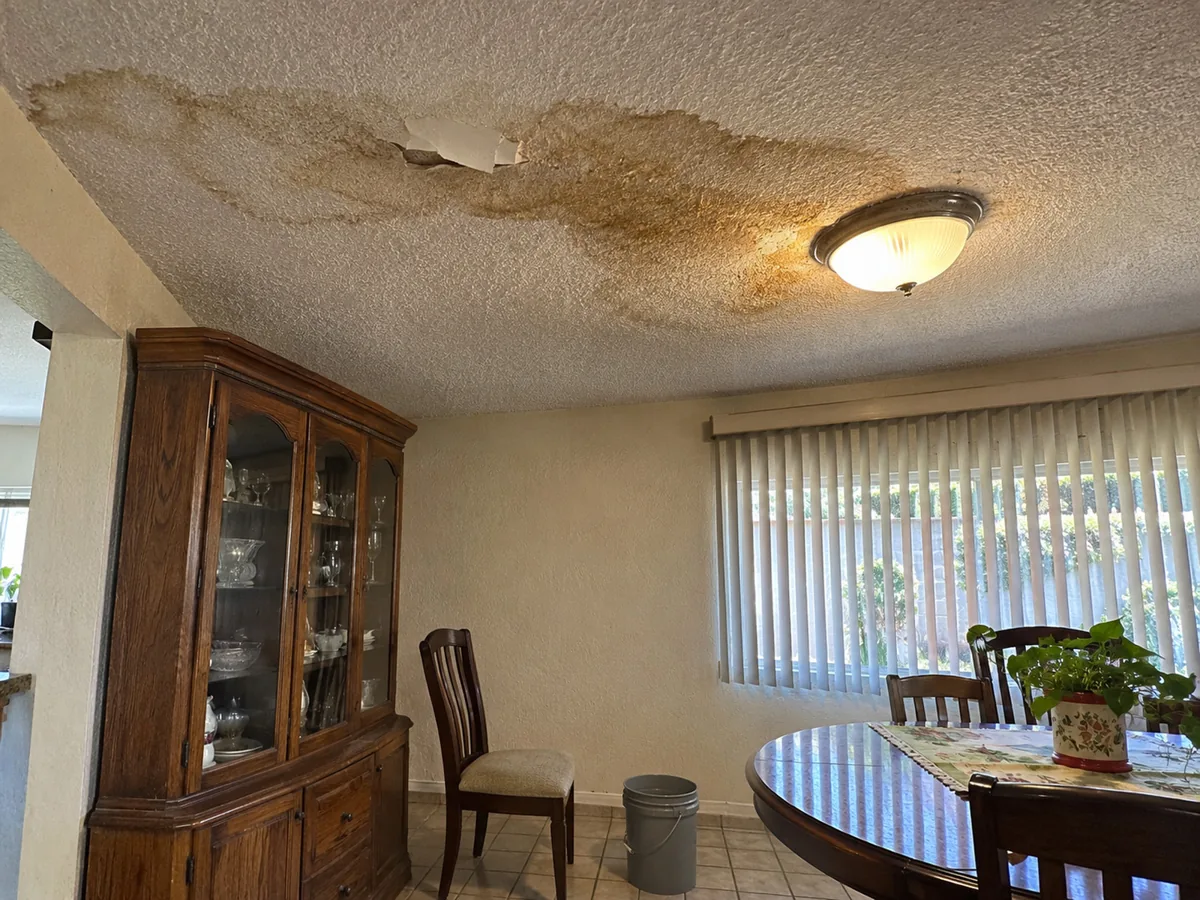
A ceiling stain can be displaced from the original leak because water follows framing and other surfaces. A sagging ceiling is a potential falling-material hazard and should be kept clear.
WHAT HAPPENS NEXT
What an assessment should consider
- 01
Keep people and belongings away from a bulging ceiling.
- 02
Arrange safe source investigation with the relevant trade.
- 03
Check insulation, ceiling layers, and the room below.
- 04
Confirm moisture conditions before repainting or closing repairs.
Discuss the scope before work begins
Share the discovery time, whether the source is controlled, and the rooms or materials involved. Mention any previous repairs and any known contamination. Work depends on actual conditions and access.
Ask which materials may need removal, how the area will be protected, and what information will be recorded. Repair of the original plumbing, roofing, HVAC, or drainage fault may require another professional.
The ceiling stain may be away from the entry point
Water can follow a roof member, pipe, or ceiling surface before it becomes visible indoors. A brown mark above a room identifies a place where water has affected the finish; it does not locate the exterior opening by itself. Plumbing above the ceiling is another possibility that needs consideration.
Record when the mark appeared and what was happening at the time. Rainfall, wind, use of an upstairs fixture, or a recently running appliance may provide useful clues. Share those observations without assuming the cause. A roofer or plumber may need to investigate the source while the restoration scope addresses wet interior materials.
Treat sagging ceiling materials as a separate hazard
A ceiling that is bowing, cracking, or releasing material is not a surface to stand beneath while taking photographs. Keep people and pets out of that part of the room. Water near a light fitting adds another reason to avoid contact and arrange appropriate assistance.
Do not puncture a ceiling bulge or enter an attic simply to speed the cleanup. The condition of the assembly, access, wiring, and any overhead load should be considered first. Explain what you can see from a safe position so the assessment can account for both the water and the unstable material.
Insulation and cavities can remain wet after the drip stops
A stopped drip may mean the rainfall ended or a fixture is no longer being used. It does not necessarily mean the cavity has dried. Insulation, framing, and the reverse side of the ceiling finish may retain water after the visible flow has ceased.
Ask what is accessible for inspection and whether selective removal is needed to assess the assembly. A patch drawn only around the visible stain may not match the wet area. Conversely, an old dry stain may need a source investigation and finish repair without the same removal scope as a current saturated ceiling.
Plan the finish repair after the moisture work
Ceiling reconstruction can involve board replacement, joint finishing, texture matching, stain treatment, and painting. These tasks should follow confirmation of the source repair and review of the affected materials. A coat of stain-blocking primer is a finish step, not evidence that concealed framing is dry.
Discuss whether adjoining surfaces need protection and who will remove fixtures before repair. Keep the source repair record with the drying information so a later recurrence can be investigated against an accurate history. Include the date and conditions of any new stain instead of assuming it is the same leak.
What the inspection needs to resolve
| Observed condition | Why it matters | Useful next step |
|---|---|---|
| Stain below an upper room | Roof entry is only one possible source | Compare rain and fixture-use history |
| Ceiling is sagging | Finish material may be unstable | Keep the area clear and arrange assessment |
| The drip has stopped | Insulation and framing may still be wet | Check the cavity before cosmetic repair |
How to tell whether drying is progressing
The useful comparison is between repeat readings at identified locations. Ask which wall, floor layer, or framing member is being checked and whether the instrument setting suits that material. An unexplained number from a handheld meter is less useful than a record that shows the location, method, and change over time.
Room temperature and humidity describe the surrounding air. They do not prove that the center of a thick material or the underside of a floor has dried. A dry surface and a damp concealed layer can exist at the same time. Where readings stop improving, access, equipment placement, or the assumption that the source has stopped may need another look.
Before finishes are reinstalled, review the affected assembly and any product-specific installation requirements with the repair contractor. The target for a replacement flooring system may involve a different test from a quick moisture survey. Avoid treating one meter setting or a fixed number of equipment days as a universal completion test.
What to ask for in the work scope
Ask for a description of the affected rooms and the materials included in the work. A room name alone is not enough when water has reached a cabinet cavity, an adjoining closet, or the ceiling below. Mark the boundaries together and ask what would cause the scope to change after work starts.
The estimate should distinguish water removal, cleaning, equipment, material removal, and reconstruction where those items apply. Ask whether monitoring visits are included and how additional findings are approved. A price based only on square footage can miss the difference between accessible tile and several wet layers beneath an installed floor.
Keep a copy of the agreed scope alongside discovery photographs, the source repair report, and later invoices. These records help you follow the job and answer questions from a property manager or insurer. Your insurer determines coverage under the policy; the cleanup contractor’s assessment documents conditions and proposed work.
USEFUL ANSWERS
Before you make the call
Can I just paint over the stain?
Painting does not resolve a wet assembly or stop an active leak. The source should be corrected and materials assessed before cosmetic repair.
Is roof and ceiling leak damage available outside Mercer Island?
We also cover Bellevue, Seattle, Medina, Newcastle, and Clyde Hill. Call with the property city, affected rooms, and access requirements to discuss an assessment.
What should I tell the roof and ceiling leak damage help line?
A ceiling stain, drip, or wet room after rain? Describe where it appears and keep clear of sagging material.
What affects the scope of roof and ceiling leak damage?
The water source, duration, affected materials, contamination, and access all matter. Discuss the proposed work and any separate source repair before authorizing the scope.
Can I call about roof and ceiling leak damage after office hours?
Emergency service is available 24 hours at (564) 777-0869. Office hours are Monday through Friday, 8:00 AM to 7:00 PM. Call directly to discuss the current situation and availability.