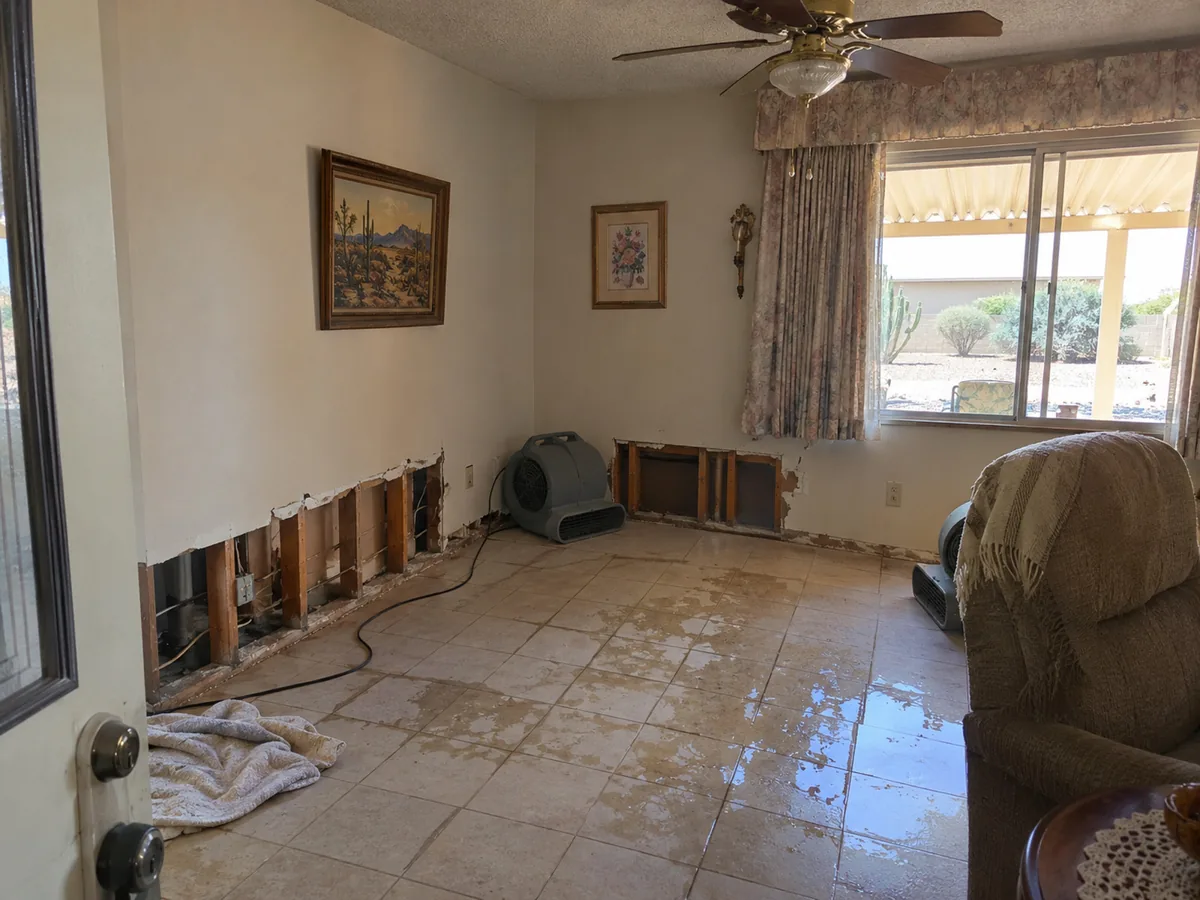
Outdoor water can carry soil, debris, and contaminants into a building. The entry route must be investigated alongside the condition of wet finishes. Rain-related damage should not automatically be treated as a clean plumbing leak.
WHAT HAPPENS NEXT
What an assessment should consider
- 01
Keep clear of moving water and electrical hazards.
- 02
Record entry points from a safe place.
- 03
Separate public drainage concerns from private building cleanup.
- 04
Assess affected materials and suitable disposal before drying.
Discuss the scope before work begins
Share the discovery time, whether the source is controlled, and the rooms or materials involved. Mention any previous repairs and any known contamination. Work depends on actual conditions and access.
Ask which materials may need removal, how the area will be protected, and what information will be recorded. Repair of the original plumbing, roofing, HVAC, or drainage fault may require another professional.
Rain entry and indoor supply leaks need different plans
Water entering from a yard, driveway, window well, or exterior opening may carry material from outside. Its appearance alone does not establish how it should be handled. Describe the route, the areas it crossed, and whether water is still entering before arranging extraction or moving affected belongings.
A storm may expose several issues at once. An overflowing downspout, a wet doorway, and a roof leak can affect different assemblies during the same event. The assessment should identify separate entry routes where they exist. Treating every wet room as one identical loss can leave part of the building and part of the source problem unresolved.
Record the outdoor route without entering floodwater
From a safe position, note where water collected before reaching the house. Photograph an overflowing surface inlet or the direction of flow if it is already visible. Do not open drainage covers, cross moving water, or walk into a road to get a better view.
Mercer Island’s public stormwater system and private property drainage have different responsibilities. If the suspected problem involves a public right of way, report it to the city as well as arranging attention to wet indoor materials. An interior cleanup visit does not replace investigation of a public pipe, culvert, or drainage connection.
The water line does not show every affected material
A baseboard may mark the height of visible water while the wall covering above it has absorbed moisture. Flooring can hold water beneath a surface that has been wiped clean. Include thresholds, adjoining closets, and the spaces behind built-in furnishings when the damage is assessed.
Contamination can change the decision about porous materials. Ask how materials will be separated, removed, and carried out without spreading debris through unaffected rooms. Cleaning, drying, and reconstruction should each have a defined purpose. There is no useful promise that every finish can be saved before the water source and material condition are known.
Prevent another entry while repairing this loss
A drying plan addresses the present wet building. The route that admitted stormwater also needs correction. Depending on the cause, that may involve a roof opening, door detail, downspout, private drain, or an issue requiring city investigation. Discuss who is responsible for each part of that work.
Avoid improvised changes that send runoff to a neighboring property or an unapproved outlet. Before a permanent drainage alteration, check the relevant city requirements and obtain suitable design advice. Keep the present entry photographs and any later drainage records so the next heavy rainfall can be compared with documented conditions.
What the inspection needs to resolve
| Observed condition | Why it matters | Useful next step |
|---|---|---|
| Outdoor water entered a doorway | Contamination and concealed spread need review | Identify the route and affected layers |
| Street inlet is overflowing | Public drainage may need attention | Report the city concern separately |
| Damage repeats after rain | The entry route may remain unresolved | Coordinate source correction with restoration |
How to tell whether drying is progressing
The useful comparison is between repeat readings at identified locations. Ask which wall, floor layer, or framing member is being checked and whether the instrument setting suits that material. An unexplained number from a handheld meter is less useful than a record that shows the location, method, and change over time.
Room temperature and humidity describe the surrounding air. They do not prove that the center of a thick material or the underside of a floor has dried. A dry surface and a damp concealed layer can exist at the same time. Where readings stop improving, access, equipment placement, or the assumption that the source has stopped may need another look.
Before finishes are reinstalled, review the affected assembly and any product-specific installation requirements with the repair contractor. The target for a replacement flooring system may involve a different test from a quick moisture survey. Avoid treating one meter setting or a fixed number of equipment days as a universal completion test.
What to ask for in the work scope
Ask for a description of the affected rooms and the materials included in the work. A room name alone is not enough when water has reached a cabinet cavity, an adjoining closet, or the ceiling below. Mark the boundaries together and ask what would cause the scope to change after work starts.
The estimate should distinguish water removal, cleaning, equipment, material removal, and reconstruction where those items apply. Ask whether monitoring visits are included and how additional findings are approved. A price based only on square footage can miss the difference between accessible tile and several wet layers beneath an installed floor.
Keep a copy of the agreed scope alongside discovery photographs, the source repair report, and later invoices. These records help you follow the job and answer questions from a property manager or insurer. Your insurer determines coverage under the policy; the cleanup contractor’s assessment documents conditions and proposed work.
USEFUL ANSWERS
Before you make the call
Will interior drying prevent another storm loss?
Drying helps address the present damage. The roof, opening, grading, or drainage issue that allowed entry also needs investigation and correction.
Is storm water damage available outside Mercer Island?
We also cover Bellevue, Seattle, Medina, Newcastle, and Clyde Hill. Call with the property city, affected rooms, and access requirements to discuss an assessment.
What should I tell the storm water damage help line?
Rainwater has entered the building? Tell us the entry point and which rooms or floor layers are affected.
What affects the scope of storm water damage?
The water source, duration, affected materials, contamination, and access all matter. Discuss the proposed work and any separate source repair before authorizing the scope.
Can I call about storm water damage after office hours?
Emergency service is available 24 hours at (564) 777-0869. Office hours are Monday through Friday, 8:00 AM to 7:00 PM. Call directly to discuss the current situation and availability.