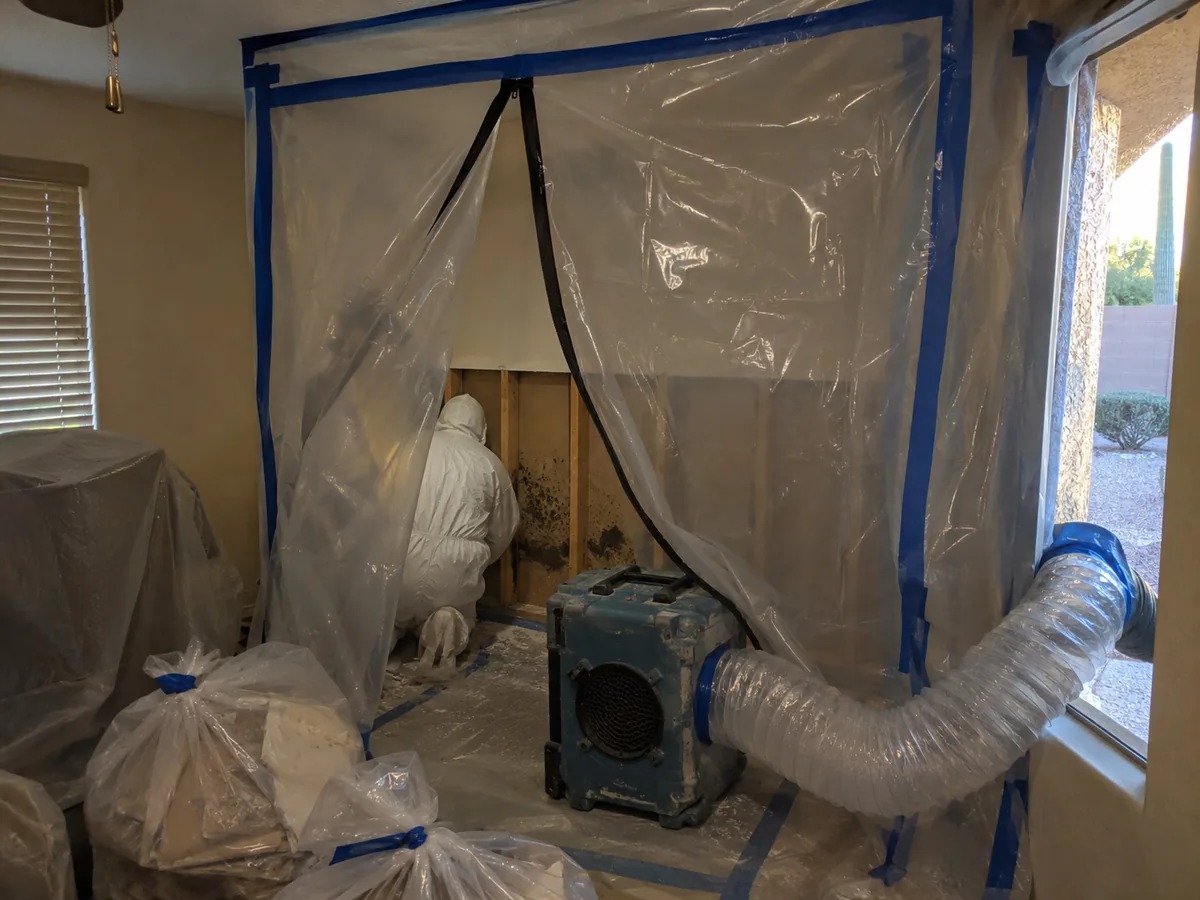
Mold can return if the moisture problem remains. The extent of growth, affected materials, and water source guide the cleanup approach. Painting over visible growth does not remove the underlying problem.
WHAT HAPPENS NEXT
What an assessment should consider
- 01
Identify and correct the wetting source.
- 02
Assess the visible area and potential concealed moisture.
- 03
Discuss containment and material handling before disturbance.
- 04
Check the cleaned area and moisture conditions before refinishing.
Discuss the scope before work begins
Share the discovery time, whether the source is controlled, and the rooms or materials involved. Mention any previous repairs and any known contamination. Work depends on actual conditions and access.
Ask which materials may need removal, how the area will be protected, and what information will be recorded. Repair of the original plumbing, roofing, HVAC, or drainage fault may require another professional.
Mold remediation begins with the moisture problem
Visible growth often brings the problem to attention, but the first question is why the material stayed wet. A plumbing leak, repeated rain entry, or another moisture source can keep feeding the same area. Removing a surface patch without correcting that condition leaves the reason for recurrence in place.
Describe where growth is visible and how the area was first discovered. Include the history of leakage, any earlier removal or painting, and whether the material is still damp. Color is not a reliable way to decide the extent of work or identify what is growing. The condition and affected assembly need assessment.
Disturbance can expose a larger concealed area
A mark beside a baseboard may be only the accessible face of a wall problem. Peeling off trim, sanding, or opening the wall without a plan can spread debris and reveal conditions that need different handling. Discuss inspection access and protection of occupied rooms before beginning that work.
The scope should identify visible growth, suspected concealed areas, and the limits of the inspection. A contractor should be able to explain what they know and what remains uncertain. A neat outline around the visible patch is not automatically the correct boundary when there is evidence of moisture behind the finish.
Cleaning and removal depend on the material
An intact hard surface and a deteriorated absorbent panel do not present the same restoration choice. Ask which materials are proposed for cleaning and which for removal, and why. A coating over an affected surface should not substitute for removal of unsuitable material or correction of the water source.
Where a room is occupied, discuss isolation, movement of belongings, and the route for waste. The plan should consider neighboring spaces and any HVAC components suspected of being affected. Do not run a system known or suspected to be contaminated simply to increase air movement through the work area.
Agree on the completion review before work starts
Ask how the cleaned area and remaining materials will be reviewed. The answer should account for the original moisture source, visible condition, and the scope of the remediation. If a separate assessor or testing service is proposed, clarify their role, when they attend, and what the result is intended to establish.
Retain photographs, the agreed removal boundary, and source repair records. A later cosmetic repair should not conceal an unresolved wetting issue. If the same area becomes damp again, note the new event and conditions so it can be investigated as current evidence rather than treated only as a stain left from the previous job.
What the inspection needs to resolve
| Observed condition | Why it matters | Useful next step |
|---|---|---|
| Growth beside a baseboard | A concealed wet area may extend farther | Discuss inspection before disturbing finishes |
| The patch was painted before | The moisture source may remain active | Investigate wetting and material condition |
| HVAC contamination is suspected | Airflow may spread affected material | Discuss system assessment before operation |
How to tell whether drying is progressing
The useful comparison is between repeat readings at identified locations. Ask which wall, floor layer, or framing member is being checked and whether the instrument setting suits that material. An unexplained number from a handheld meter is less useful than a record that shows the location, method, and change over time.
Room temperature and humidity describe the surrounding air. They do not prove that the center of a thick material or the underside of a floor has dried. A dry surface and a damp concealed layer can exist at the same time. Where readings stop improving, access, equipment placement, or the assumption that the source has stopped may need another look.
Before finishes are reinstalled, review the affected assembly and any product-specific installation requirements with the repair contractor. The target for a replacement flooring system may involve a different test from a quick moisture survey. Avoid treating one meter setting or a fixed number of equipment days as a universal completion test.
What to ask for in the work scope
Ask for a description of the affected rooms and the materials included in the work. A room name alone is not enough when water has reached a cabinet cavity, an adjoining closet, or the ceiling below. Mark the boundaries together and ask what would cause the scope to change after work starts.
The estimate should distinguish water removal, cleaning, equipment, material removal, and reconstruction where those items apply. Ask whether monitoring visits are included and how additional findings are approved. A price based only on square footage can miss the difference between accessible tile and several wet layers beneath an installed floor.
Keep a copy of the agreed scope alongside discovery photographs, the source repair report, and later invoices. These records help you follow the job and answer questions from a property manager or insurer. Your insurer determines coverage under the policy; the cleanup contractor’s assessment documents conditions and proposed work.
USEFUL ANSWERS
Before you make the call
Is every dark stain the same kind of mold?
Color alone does not identify a mold species or determine a cleanup method. The extent, material, and moisture conditions are more useful starting points for assessment.
Is mold and moisture remediation available outside Mercer Island?
We also cover Bellevue, Seattle, Medina, Newcastle, and Clyde Hill. Call with the property city, affected rooms, and access requirements to discuss an assessment.
What should I tell the mold and moisture remediation help line?
Musty smell or dark growth on framing or drywall? Call and describe where it appears and any known moisture source.
What affects the scope of mold and moisture remediation?
The water source, duration, affected materials, contamination, and access all matter. Discuss the proposed work and any separate source repair before authorizing the scope.
Can I call about mold and moisture remediation after office hours?
Emergency service is available 24 hours at (564) 777-0869. Office hours are Monday through Friday, 8:00 AM to 7:00 PM. Call directly to discuss the current situation and availability.