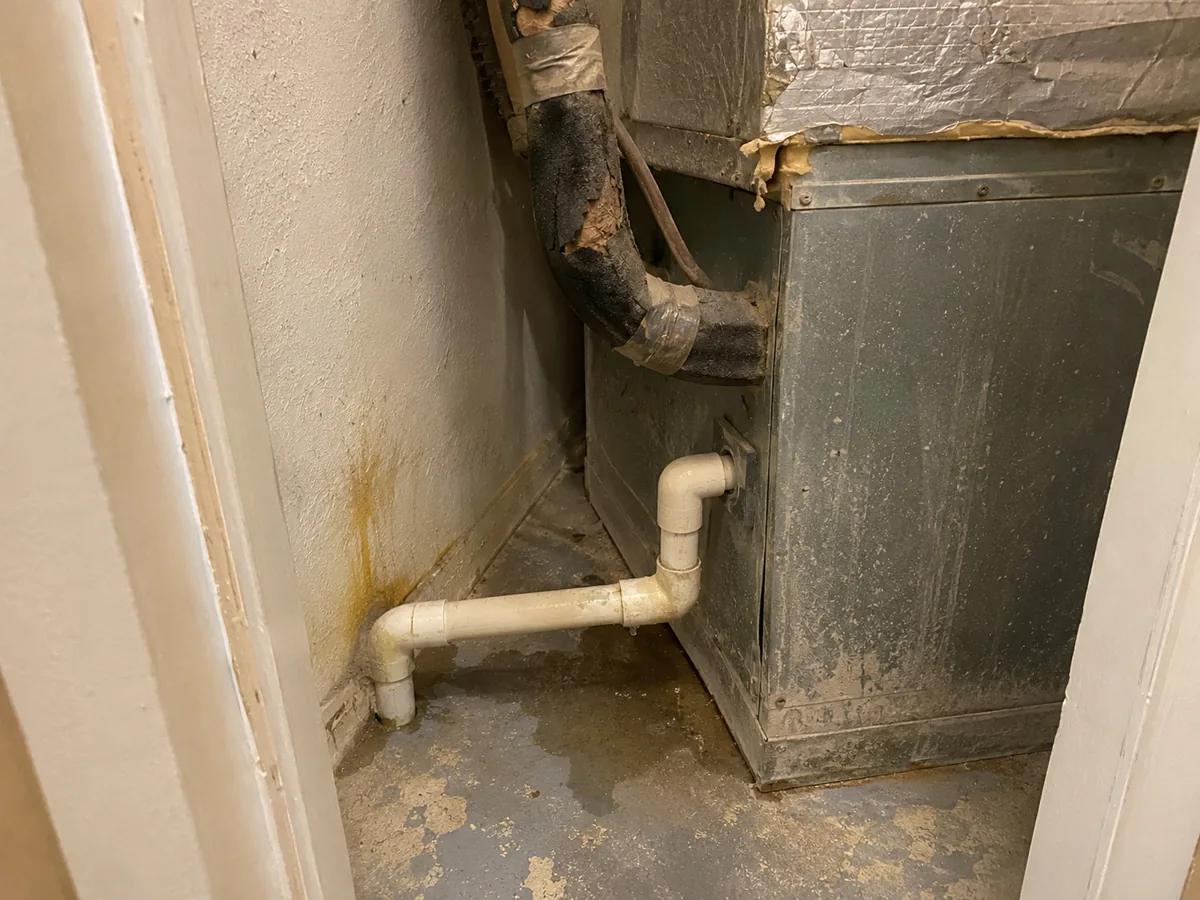
An overflowing condensate drain or collection pan may wet the equipment platform, walls, or ceiling below. An HVAC professional should correct the equipment or drain fault while affected finishes are assessed.
WHAT HAPPENS NEXT
What an assessment should consider
- 01
Keep clear of wet electrical components.
- 02
Arrange HVAC diagnosis before restarting affected equipment.
- 03
Check below the platform and along nearby wall bases.
- 04
Assess insulation and finish materials for drying or removal.
Discuss the scope before work begins
Share the discovery time, whether the source is controlled, and the rooms or materials involved. Mention any previous repairs and any known contamination. Work depends on actual conditions and access.
Ask which materials may need removal, how the area will be protected, and what information will be recorded. Repair of the original plumbing, roofing, HVAC, or drainage fault may require another professional.
Correct the condensate problem before restarting equipment
An HVAC condensate leak may involve a blocked drain, a collection pan, a connection, or another equipment fault. Have the system assessed by the appropriate HVAC professional. Cleanup around the unit should not be treated as proof that it can return to operation without that source check.
Water near electrical components needs safe handling. Keep away from wet controls and describe the equipment location when you call. A unit over an occupied room can create a ceiling problem, while an installation on a platform can conceal moisture beneath it. The source and the building damage each need attention.
Trace the route from the unit to the visible stain
A drip at the ceiling may be some distance from the equipment. Water can follow framing, a pipe penetration, or a panel joint before becoming visible. Tell the assessor about the equipment above the room and any recent service history, along with when the stain appears.
If moisture develops only during operation, that timing is useful information for the HVAC trade. It is not a reason to keep running suspect equipment to reproduce the leak yourself. Share the existing observations and let the appropriate professional decide how to inspect or test the source safely.
Platforms and service closets can hide wet material
An enclosed platform may contain framing, board, insulation, or finish layers that are not visible around the unit. Ask whether the underside and nearby wall base can be inspected. Drying the exposed floor beside the installation may leave the wettest part of the assembly untouched.
Access can require coordination with the HVAC contractor, particularly if the equipment must be moved or disconnected. Discuss that need before the drying plan assumes every surface is reachable. Where a ceiling below is affected, include its insulation and framing in the assessment rather than treating it only as a repainting job.
Keep system cleaning and building drying distinct
If there is suspected contamination in an HVAC component, the service professional should advise on the equipment. A building restoration plan should also consider how debris or moisture could move into occupied spaces. Increasing airflow through a suspect system is not a substitute for resolving its condition.
When the drain or equipment fault is corrected, record the repair and any recommended maintenance. Then review drying progress in the surrounding materials. The absence of a new puddle is a useful observation about the source, but it does not establish that a platform cavity, wall base, or ceiling assembly has finished drying.
What the inspection needs to resolve
| Observed condition | Why it matters | Useful next step |
|---|---|---|
| Stain follows equipment operation | The HVAC history is useful evidence | Arrange equipment diagnosis |
| Platform is wet around the unit | The underside may be concealed | Coordinate access before drying assumptions |
| Ceiling below is affected | Water can travel beyond the visible stain | Inspect the relevant ceiling assembly |
How to tell whether drying is progressing
The useful comparison is between repeat readings at identified locations. Ask which wall, floor layer, or framing member is being checked and whether the instrument setting suits that material. An unexplained number from a handheld meter is less useful than a record that shows the location, method, and change over time.
Room temperature and humidity describe the surrounding air. They do not prove that the center of a thick material or the underside of a floor has dried. A dry surface and a damp concealed layer can exist at the same time. Where readings stop improving, access, equipment placement, or the assumption that the source has stopped may need another look.
Before finishes are reinstalled, review the affected assembly and any product-specific installation requirements with the repair contractor. The target for a replacement flooring system may involve a different test from a quick moisture survey. Avoid treating one meter setting or a fixed number of equipment days as a universal completion test.
What to ask for in the work scope
Ask for a description of the affected rooms and the materials included in the work. A room name alone is not enough when water has reached a cabinet cavity, an adjoining closet, or the ceiling below. Mark the boundaries together and ask what would cause the scope to change after work starts.
The estimate should distinguish water removal, cleaning, equipment, material removal, and reconstruction where those items apply. Ask whether monitoring visits are included and how additional findings are approved. A price based only on square footage can miss the difference between accessible tile and several wet layers beneath an installed floor.
Keep a copy of the agreed scope alongside discovery photographs, the source repair report, and later invoices. These records help you follow the job and answer questions from a property manager or insurer. Your insurer determines coverage under the policy; the cleanup contractor’s assessment documents conditions and proposed work.
USEFUL ANSWERS
Before you make the call
Will clearing the drain dry the ceiling?
Clearing the drain can stop additional water. The ceiling assembly may still be wet and should be checked separately before it is closed or painted.
Is hvac condensate leak cleanup available outside Mercer Island?
We also cover Bellevue, Seattle, Medina, Newcastle, and Clyde Hill. Call with the property city, affected rooms, and access requirements to discuss an assessment.
What should I tell the hvac condensate leak cleanup help line?
Water around an HVAC platform or on the ceiling below? Tell us about the affected room and equipment location.
What affects the scope of hvac condensate leak cleanup?
The water source, duration, affected materials, contamination, and access all matter. Discuss the proposed work and any separate source repair before authorizing the scope.
Can I call about hvac condensate leak cleanup after office hours?
Emergency service is available 24 hours at (564) 777-0869. Office hours are Monday through Friday, 8:00 AM to 7:00 PM. Call directly to discuss the current situation and availability.