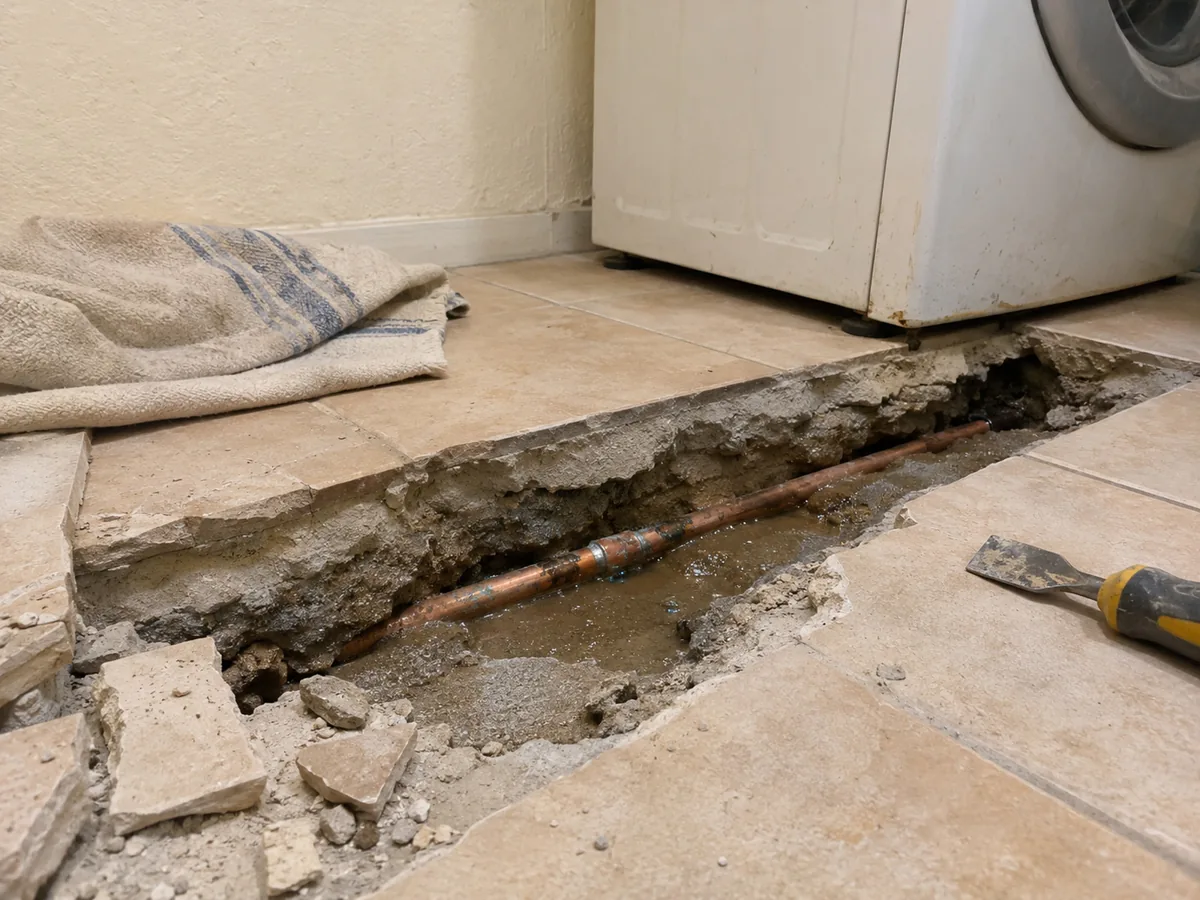
A concealed pipe leak beneath or within a slab can leave damp flooring or unexplained water use. Locating and repairing the pipe is separate from restoring the floor and other wet building materials.
WHAT HAPPENS NEXT
What an assessment should consider
- 01
Record changes in water use and where moisture appears.
- 02
Arrange pipe diagnosis and repair with the appropriate specialist.
- 03
Assess the floor assembly and nearby wall bases.
- 04
Plan drying and repair after the source is controlled.
Discuss the scope before work begins
Share the discovery time, whether the source is controlled, and the rooms or materials involved. Mention any previous repairs and any known contamination. Work depends on actual conditions and access.
Ask which materials may need removal, how the area will be protected, and what information will be recorded. Repair of the original plumbing, roofing, HVAC, or drainage fault may require another professional.
Separate a pipe diagnosis from wet-floor restoration
A suspected leak below or within a slab is a plumbing investigation first. Unexplained water use, a damp floor, or a changed surface condition can be clues, but none identifies a failed pipe on its own. A suitable specialist should diagnose the source and explain the proposed repair.
Water damage restoration addresses the materials affected by the escaped water. That may include the floor finish, underlayment, cabinet bases, and lower walls. The plumbing repair and restoration scope should share information so the building assessment follows the confirmed source and water path instead of a guess based on one damp spot.
Document the condition before access work
Where a pipe repair requires opening a floor, record the existing finish and wet boundary before work if that can be done safely. Keep photographs of any removed layers and the repair area. These help separate damage from the leak from the access needed to reach the pipe.
Discuss dust protection, occupied rooms, and the route for materials before demolition begins. Cutting and opening a slab is separate from extracting water and drying finishes. Ask which party is responsible for each activity, what access is required, and how the area will be made ready for the restoration phase.
Moisture can remain under an intact finish
A slab-related loss may leave a finish that appears mostly unchanged while the layer beneath it is damp. Floor edges, adhesive condition, and adjacent wall bases can provide clues. An assessment should consider whether the installed covering is concealing moisture or preventing meaningful access.
A quick survey reading does not establish that every floor system can be reinstalled. Concrete and floor products have specific testing considerations. If replacement is planned, ask the installer which substrate test is required and when it should be performed. Do not use a generic room drying period as the only acceptance criterion.
Verify the repair before closing the floor
Get the source repair record and ask the responsible trade how the repaired line has been checked. Restoration should proceed with an understanding of whether new water is still entering. If the wet area continues to expand, that change should be investigated rather than attributed automatically to slow drying.
Before reconstruction, review the remaining moisture conditions, removed layers, and the preparation required for the selected finish. Matching an existing floor can create additional material and layout decisions. Those belong in the repair scope early, especially where a small access opening affects a continuous floor across several rooms.
What the inspection needs to resolve
| Observed condition | Why it matters | Useful next step |
|---|---|---|
| Water use rises unexpectedly | A concealed supply fault is one possibility | Arrange plumbing diagnosis |
| Finish is damp near slab access | Leak damage and repair access can overlap | Record both boundaries before reconstruction |
| Concrete will receive new flooring | Installation may require a specific moisture test | Coordinate the substrate check with the installer |
How water moves through a room
How to tell whether drying is progressing
The useful comparison is between repeat readings at identified locations. Ask which wall, floor layer, or framing member is being checked and whether the instrument setting suits that material. An unexplained number from a handheld meter is less useful than a record that shows the location, method, and change over time.
Room temperature and humidity describe the surrounding air. They do not prove that the center of a thick material or the underside of a floor has dried. A dry surface and a damp concealed layer can exist at the same time. Where readings stop improving, access, equipment placement, or the assumption that the source has stopped may need another look.
Before finishes are reinstalled, review the affected assembly and any product-specific installation requirements with the repair contractor. The target for a replacement flooring system may involve a different test from a quick moisture survey. Avoid treating one meter setting or a fixed number of equipment days as a universal completion test.
What to ask for in the work scope
Ask for a description of the affected rooms and the materials included in the work. A room name alone is not enough when water has reached a cabinet cavity, an adjoining closet, or the ceiling below. Mark the boundaries together and ask what would cause the scope to change after work starts.
The estimate should distinguish water removal, cleaning, equipment, material removal, and reconstruction where those items apply. Ask whether monitoring visits are included and how additional findings are approved. A price based only on square footage can miss the difference between accessible tile and several wet layers beneath an installed floor.
Keep a copy of the agreed scope alongside discovery photographs, the source repair report, and later invoices. These records help you follow the job and answer questions from a property manager or insurer. Your insurer determines coverage under the policy; the cleanup contractor’s assessment documents conditions and proposed work.
USEFUL ANSWERS
Before you make the call
Does a damp slab always mean a plumbing leak?
No. Moisture can have several sources. The history of rainfall, plumbing use, and material readings needs to be considered before choosing a repair.
Is slab leak water damage available outside Mercer Island?
We also cover Bellevue, Seattle, Medina, Newcastle, and Clyde Hill. Call with the property city, affected rooms, and access requirements to discuss an assessment.
What should I tell the slab leak water damage help line?
Damp flooring around a suspected concealed pipe leak? Share the visible damage and any plumbing findings.
What affects the scope of slab leak water damage?
The water source, duration, affected materials, contamination, and access all matter. Discuss the proposed work and any separate source repair before authorizing the scope.
Can I call about slab leak water damage after office hours?
Emergency service is available 24 hours at (564) 777-0869. Office hours are Monday through Friday, 8:00 AM to 7:00 PM. Call directly to discuss the current situation and availability.